
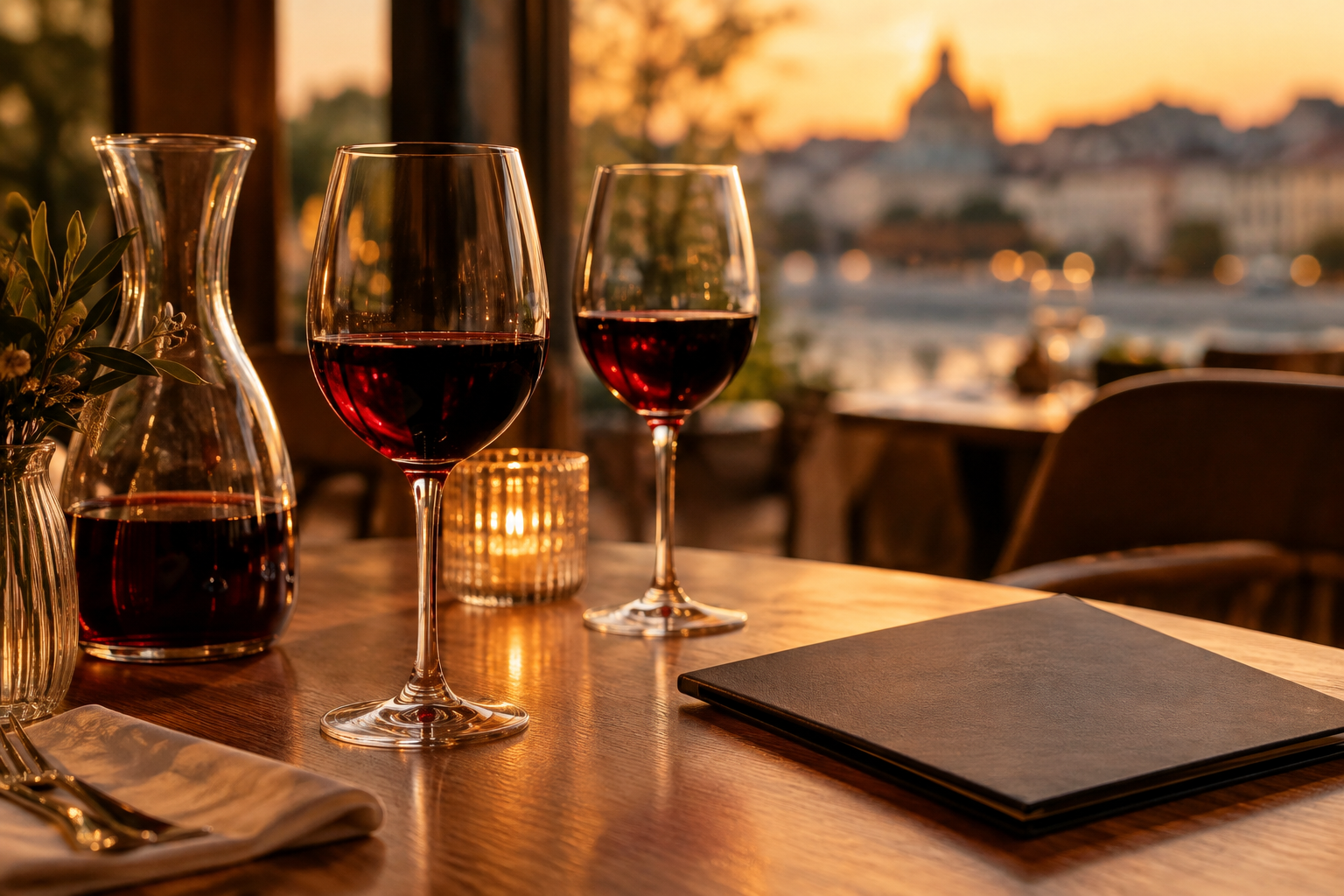
To read a Paris restaurant wine list, work through five questions: where is the wine from, who made it, which vintage is listed, how much wine are you ordering, and what does the price cover? Then translate your preferences into plain language for the person serving you. You do not need to recognise every appellation or pronounce every producer’s name to make an informed choice.
The aim is not to identify the most prestigious bottle. It is to choose something that suits your food, your company and your spending limit. Start with the practical details, use regional names as prompts for questions rather than promises, and ask for clarification before the bottle is opened.
Start with the structure, not the famous names
Before studying individual bottles, scan the list’s headings. Look for wines by the glass, then the sections for sparkling, white, rosé, red and sweet wines. Notice whether you can identify an organising principle: region, producer, style or price.
Read the headings and one complete entry together before comparing prices. If the arrangement is unclear, ask the server to show you how to follow a single line across the page. Establish which details belong to that wine and which belong to the section as a whole.
Next, establish three boundaries:
- How much do you want to spend on wine?
- How many people actually want to drink it?
- Are you choosing for one dish, several courses or contrasting orders?
A useful opening is: “We are looking for one bottle to share, within this budget, and we would prefer something fresh rather than rich.”
For reading around your evening, consider the Lifestyle section separately; keep the wine decision focused on what is available at your table.
Decode a wine-list entry one element at a time
Imagine this explicitly fictitious entry:
Domaine des Aulnes — Les Roches — Appellation Example — 2021 — 75 cl
The names are invented to demonstrate a reading exercise, not to recommend a wine. Ask the server to identify the producer, the wine’s name, its geographical designation, the meaning of the year and the quantity offered. Locate the corresponding price before considering the entry further.
Producer and cuvée
If several unfamiliar names appear together, ask: “Which part is the producer, and which is the name of the wine?” If the server uses the word *cuvée*, ask which part of the entry it refers to and what distinguishes this particular selection.
Then move to your actual preference: “How would you describe this bottle?” Avoid choosing on the appearance or familiarity of a name alone.
Appellation and geographical origin
For an unfamiliar appellation, ask two separate questions: “Where is this wine from?” and “What should we expect from this particular bottle?” Keep origin and taste as separate subjects in the conversation.
If you encounter AOC, AOP, IGP or Vin de France, ask how that designation applies to the wine under consideration. Rather than trying to reconstruct a classification system over dinner, request the explanation relevant to your choice.
Vintage and volume
Ask the server to explain what the printed year represents and to confirm the available bottle’s year. For the volume, ask: “Exactly how much wine is included at this price?”
If the list omits either detail, ask rather than fill the gap yourself. Make these checks before agreeing to the order, not after the bottle has been opened.
Use appellations as questions, then ask about style
If you cannot find a grape variety, ask for it. Instead of trying to memorise every permitted grape, invite the server to interpret the particular bottle in front of you.
Useful questions include:
- “Which grape varieties are in this wine?”
- “Is it light-bodied, medium-bodied or quite full?”
- “Does it taste dry, or is there noticeable sweetness?”
- “Is the oak obvious?”
- “Would you describe the red as gently textured or quite tannic?”
Explain what your own words mean. If you ask for something “dry”, add whether you want to avoid sweetness, a mouth-drying sensation or both. If you request something “light”, clarify whether you mean delicate flavour, gentle texture or a smaller quantity to drink.
When a description includes acidity or tannin, ask the server to translate it into the sensation you should expect. Try: “Will this feel refreshing to me, or quite sharp?” Or: “I dislike a very grippy finish; would you steer me towards another option?”
A useful formulation is: “I want a red without noticeable sweetness, but I also dislike a drying finish. What would you suggest within our budget?”
Read the vintage without turning dinner into an exam
Avoid choosing an older wine solely because it is older, or rejecting a recent vintage because it seems too young. Instead, make the year part of a conversation about the bottle offered tonight.
Ask about its present character. Is the fruit still prominent? Does the server describe more developed savoury notes? Do they recommend drinking it now, and why?
Rather than stopping at “Was it a good year?”, follow up with: “How does that affect this wine, and would it suit the style we described?” Request an explanation tied to your order rather than a general verdict.
If you encounter NV or sans année, ask the server to explain the notation and how to identify the bottle being recommended. Do not assign your own quality ranking to an unfamiliar abbreviation.
Before confirming, ask the server to check that the available bottle matches the year printed on the list. If a different vintage is offered, reconsider it as a new choice rather than assuming the substitution is immaterial.
You can say: “Is the listed vintage the one you have tonight? If not, how would you describe the replacement?”
Check bottle formats and the basis of the price
Read the stated volume before comparing entries. For a half-bottle, standard bottle or magnum, ask for the exact quantity rather than relying on the format name alone. If the notation is unfamiliar, request the amount in a unit you understand.
For a glass, ask about the pour size. If comparing it with another serving option, confirm both quantities and both prices first. Choose according to how much the table actually wants to drink, not an assumed saving.
Use the following table as a decision aid rather than a ranking.
| Option to consider | Your decision criterion | What to check | Question to ask |
|---|---|---|---|
| Wine by the glass | Individual preferences or a limited amount | Pour size, wine identity and price | “What quantity does this price include?” |
| Half-bottle | A smaller shared order | Exact volume and available choices | “Which options fit our preferred style?” |
| Standard bottle | One shared selection | Vintage, volume and total price | “Could you confirm the size and price?” |
| Magnum | A group considering this format | Quantity wanted and total cost | “How much wine would we be ordering?” |
| Carafe or pichet | A specified quantity | Wine identity, measure and price | “Which wine is served, and how much is included?” |
| Pairing proposal, if offered | Whether the proposed arrangement suits your meal | Included wines, number of pours, measures and total price | “What exactly would we be ordering?” |
If a carafe is mentioned, clarify whether you are discussing the wine order, its quantity or how an already selected bottle will be served. Ask for each part of the proposal explicitly.
There is no need to order a larger format simply because it appears more economical, and you need not finish a bottle to justify having chosen it.
Understand service language before agreeing
Treat unfamiliar service terms as prompts for questions rather than instructions to accept automatically. Ask for an English explanation whenever that would make the order clearer.
If you encounter au verre or la carte des vins, ask the person taking your order to show you the relevant section. If you would like specialist guidance, ask whether someone can discuss the wine choices with you.
When carafer or décanter is proposed, ask: “What would you do to this bottle, and why do you recommend it?” Discuss the proposed service rather than requesting it as a mark of sophistication.
If you hear chambré, ask what serving temperature is intended. Describe your preference directly: “Could we have this slightly cooler?” For a white wine that seems too cold to assess, consider letting a small amount warm in the glass before deciding.
When the bottle arrives, check its identity, vintage and format against your order. Discuss your preferred style before ordering rather than waiting until an initial taste is offered.
If something seems wrong, describe the sensation calmly: “I am noticing a musty smell; could you check it?” Avoid declaring a technical fault you cannot identify. If the sensation is difficult to describe, consider saying, “This is not what I expected; could you taste it and help me understand what I am noticing?” Ask how to proceed without assigning a diagnosis yourself.
A step-by-step method for ordering
1. Set the budget discreetly
Point to a price on the list or state a clear ceiling. Specify whether it applies to one bottle or to the wine for the whole meal. If you are offered alternatives, check their prices before choosing.
2. Describe preferences in ordinary language
Give two or three useful signals: fresh or rich, light or full-bodied, subtle or pronounced oak, gentle or firm texture. Mention a style you have enjoyed if it helps, but avoid turning a remembered label into an inflexible requirement.
3. Explain the food and the table
Tell the server what everyone is ordering and whether you want one shared wine or separate glasses. Ask them to consider sauces, seasoning and texture as well as the main ingredients.
4. Request a small comparison
Ask for two options within budget and one clear distinction between them: “Which is fresher, and which is fuller?” Keep the discussion centred on those choices unless neither sounds appealing.
5. Confirm the complete order
Before opening, confirm the wine, producer, vintage, format and price. If something differs from the list, pause and agree on the replacement explicitly.
6. Review the first pour
Consider whether the temperature and condition seem appropriate to you. Raise concerns early and politely. If you are uncertain, ask for the server’s assessment rather than forcing a diagnosis.
For reading beyond the table, consider the Magazine section; leave extended browsing until after dinner.
Three fictional situations to practise with
Different main courses, one shared bottle
In this fictional example, one diner orders fish with a rich sauce and another chooses roast poultry. Rather than applying a rigid white-for-fish rule, they ask for two wines to consider with both dishes.
Their question is: “We want something dry and moderately full, without pronounced oak. Which two bottles within this budget would you consider?” They then choose according to the contrast explained by the server.
An unfamiliar appellation within budget
A fictional couple recognises none of the regional names. They resist choosing the most expensive bottle they can afford as a shortcut to confidence.
Instead, they identify a preference: “We enjoy lighter reds with freshness and gentle texture.” They ask about grape varieties and current drinking style, then confirm the vintage and volume before ordering.
One guest drinks wine and another does not
At a fictional dinner, only one guest wants wine. They examine the by-the-glass section and ask about pour sizes before considering a bottle.
They also ask what non-alcoholic choices are available, without assuming a particular restaurant offers them. The decision follows what each guest wants to drink, rather than an expectation that every table should order a bottle.
Common mistakes worth examining
Ordering prestige instead of preference. Before selecting a famous name, ask whether its described style is what you want tonight.
Using price instead of asking about taste. Discuss sweetness, texture and freshness separately from your spending limit.
Leaving “fruity” unexplained. If sweetness matters, ask directly whether the wine tastes sweet to the server rather than stopping at that description.
Ignoring the format column. Check units before comparing neighbouring prices.
Agreeing to an unclear upgrade. If a recommendation exceeds your limit, restate the budget without apology. Ask for an alternative rather than accepting an ambiguous “slightly more”.
Ordering by production terminology alone. If natural, organic or biodynamic wording interests you, ask what it means for the specific wine, then separately ask how the wine tastes.
Feeling obliged to demonstrate expertise. Start with a clear preference and a thoughtful question. For later browsing, return to the homepage after the meal.
FAQ
Do I need to know French grape varieties to order confidently?
Start with the sensations you prefer and ask which grapes are used in a shortlisted wine. Request an explanation focused on your choice rather than a complete appellation lesson.
Should I choose the older vintage?
Ask about both bottles’ current character before deciding. Make your preference, budget and meal the criteria, rather than choosing by year alone.
Can I ask for help without revealing my budget aloud?
Try pointing to an entry or a price range and saying, “Something around here.” Confirm the exact price of the recommendation before it is opened.
What should I do if I dislike the first taste?
Explain what you notice and distinguish a suspected fault from a style mismatch. Ask the server to assess the wine if it seems unsound. Discuss the options politely without assuming an automatic replacement.