
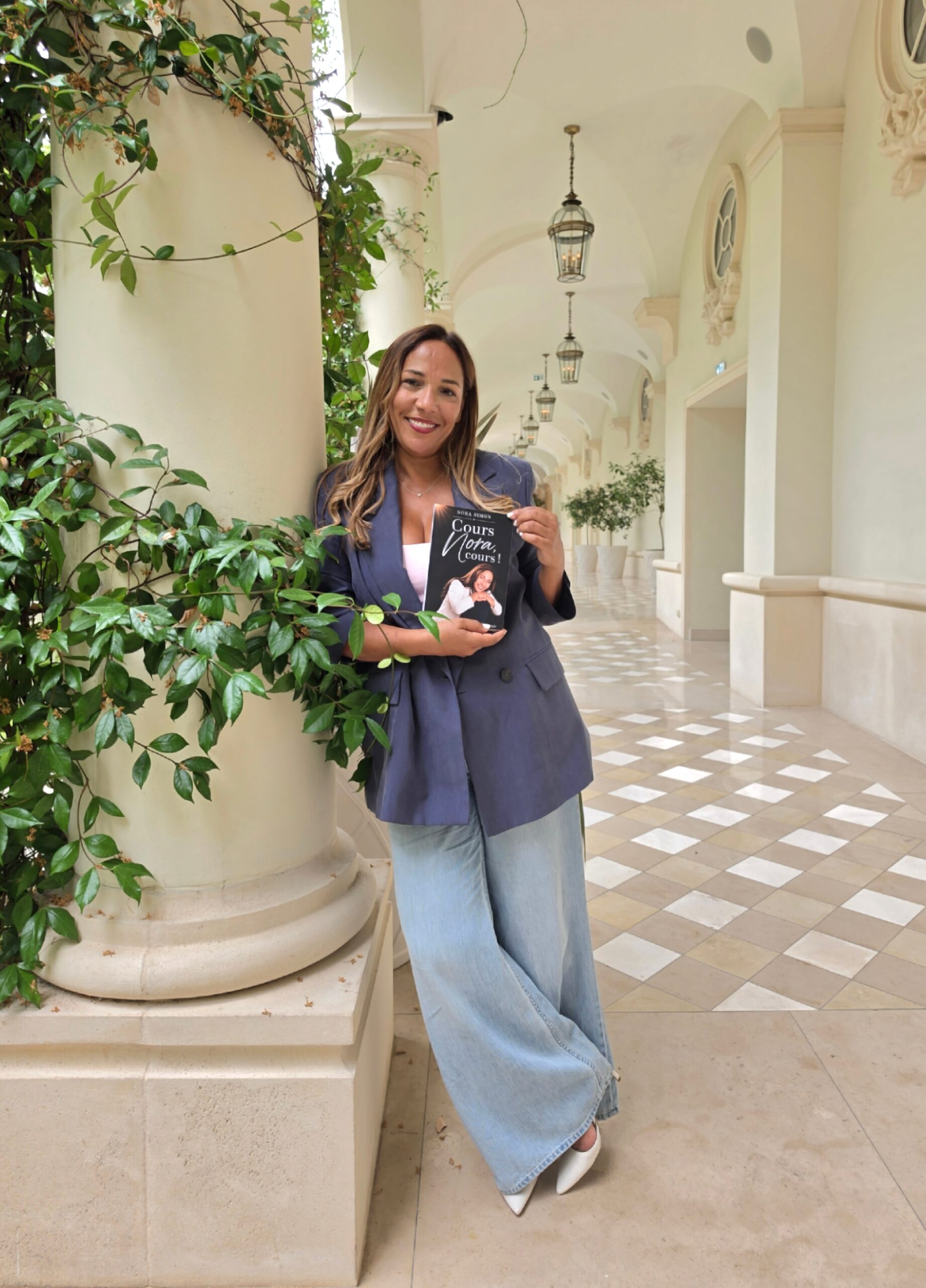
Nora Simon in a few words:
Therapist and public speaker
Founder of the Festival International des Lys d’Or @festivaldeslysdor
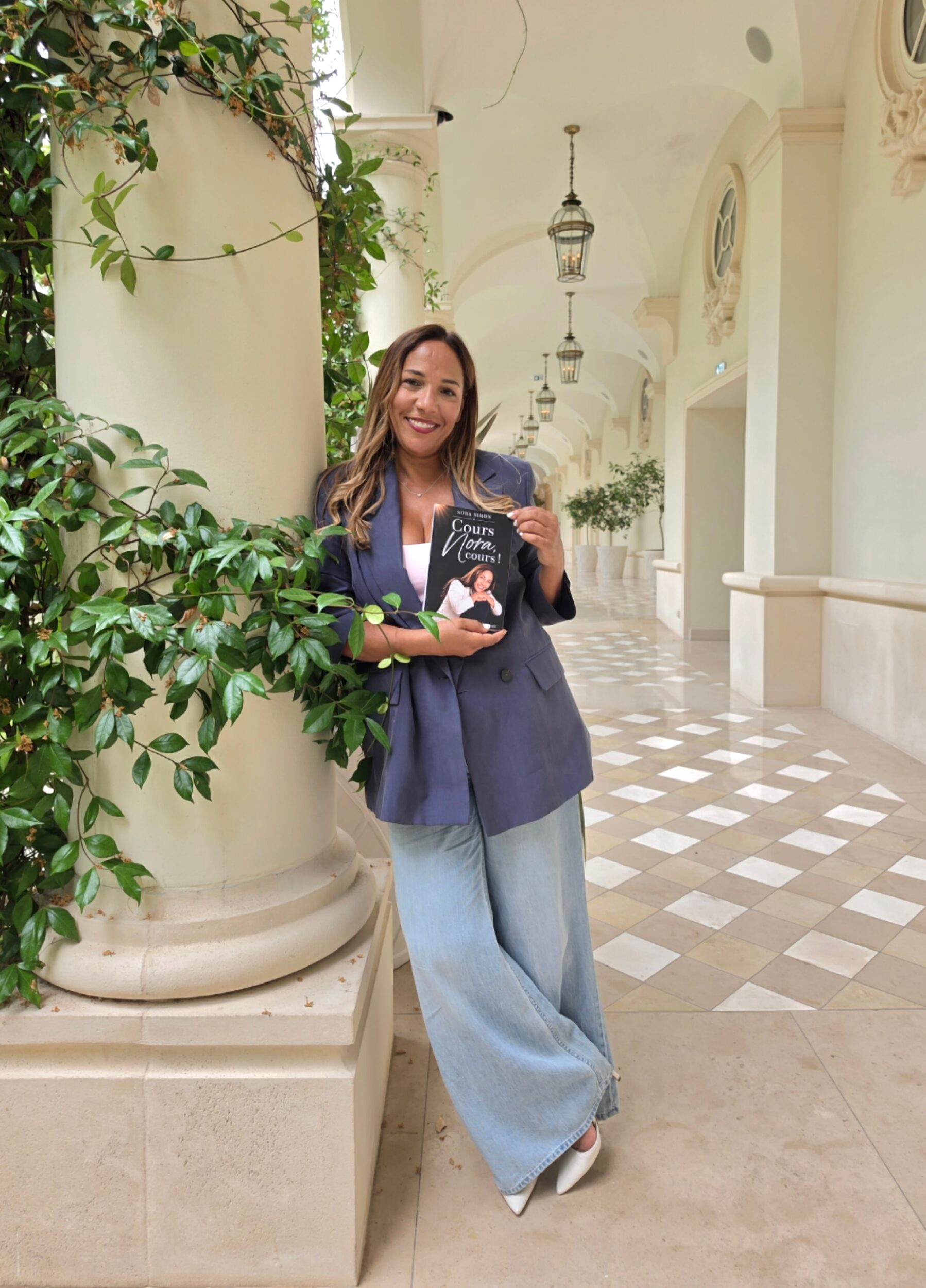
Author of “Run, Nora, Run!” (“Cours Nora, cours!”)
Gives talks throughout France on resilience, trauma and rebuilding one’s life
Blending resilience, sharing and hope, Nora has written a profoundly human first book. More than a simple autobiographical account, her book retraces a journey of rebuilding shaped by hardship, but also by a remarkable desire to live. Through this sincere testimony, she invites everyone to believe that it is possible to rise again, even after the most violent storms. We meet a woman for whom words have become a true breath of life.
Nora, when did the idea of writing this book first come to you?
• This book was born during a period when I needed to make sense of what I was going through. I had already written a large part of the manuscript, but the final chapter was still missing. I could not publish the book until I understood why certain wounds kept resurfacing in my life.
The turning point came after another difficult experience. That evening, I told myself that I could no longer keep everything inside. I began writing so that I could breathe, to put words to what seemed impossible to tell. That was the moment when the book truly came to life.
Why did you choose the title “Run, Nora, Run!”?
• For a long time, I felt as though I was running to survive: running after love, recognition and security. Today, the title has taken on a different meaning. It encourages me to keep moving forward, no longer to escape, but to live fully.
Some stories imprison us. Others open a door. “Run, Nora, Run!” belongs to the second category. It reminds us that, even when life breaks us, we always retain the possibility of choosing the direction of our next steps.
What message would you like to convey to your readers through this book?
• Above all, I wanted to share my experience. I did not want to write a book that lectures people. I wanted to tell my story simply, in my own words, so that everyone could recognise a part of themselves in it.
Many of us carry invisible wounds, trauma or fears that we hide because we are ashamed. My hope is that every reader will understand that they are not alone.
Above all, I want to convey hope. Our story does not condemn us. Even after years of suffering, it is always possible to understand what we are experiencing, to break free from repeating patterns and to rebuild our lives.
What does being a strong woman mean to you?
• A strong woman is not a woman who never cries. She is not a woman who never falls. To me, a strong woman is someone who eventually finds the strength to rise again. It does not matter whether it takes a month, five years or an entire lifetime. Strength is not measured by how quickly we heal, but by the courage to keep going despite our wounds.
I also believe that we must stop judging women who remain in difficult situations for a long time. Psychological control, trauma and fear are very real. Simply resisting is already an immense act of courage. Strength is built little by little.
Do you think writing can be a form of therapy?
• Without any hesitation. Writing allowed me to set down what I had been carrying for years. No one was judging me. No one was telling me whether I was right or wrong to feel a particular emotion.
At first, there was a genuine emotional release. Then came awareness. After that, the desire to share naturally followed.
Even today, I remain convinced that writing has a profound effect on us. It helps us bring order to our story and regain a form of inner peace.
Did you feel a sense of freedom after finishing your book?
• Yes. An immense sense of freedom. The final chapter was the most difficult to write because it dealt with my deepest wound: rejection. I understood that, as long as this wound was not truly acknowledged, it would continue to unconsciously influence certain choices in my life.
Writing this chapter was a genuine liberation. I was finally able to look at my story with greater kindness and understanding.
Where can people find your book?
• The book is available in paperback. Very soon, it will also be available online through Librinova and distributed on major platforms such as Amazon, Fnac and Cultura.
The book is also the starting point for a series of talks that I will give throughout France. I enjoy continuing this dialogue with readers and sharing these reflections on resilience.
Do you think this book could help your patients?
• I sincerely hope so. The first responses have touched me deeply. Many people have written to tell me that they recognised themselves in certain situations, that they had regained hope or that they had finally understood certain mechanisms within their own stories.
I do not claim to have a miracle method. Every journey is unique. But if my testimony can create a turning point, encourage reflection or help someone find the courage to ask for help, then this book will already have found its purpose.
Do you have any other writing projects?
• Honestly, I thought this would be my only book. But for some time now, a new idea has begun to take shape. I do not yet know when it will come to life, but a new theme is already calling to me.
At the same time, I am continuing to develop my talks, as well as the forthcoming editions of my festival, which will continue to travel to different cities. Today, I am allowing each new encounter to guide the next chapter of this beautiful adventure.
Through her story, Nora reminds us of an essential truth: resilience does not erase our wounds; it gives them new meaning. Her book is not merely the story of one person’s life journey. It is an outstretched hand to all those who are still searching for the strength to believe that, after the storms, it is always possible to be reborn.