

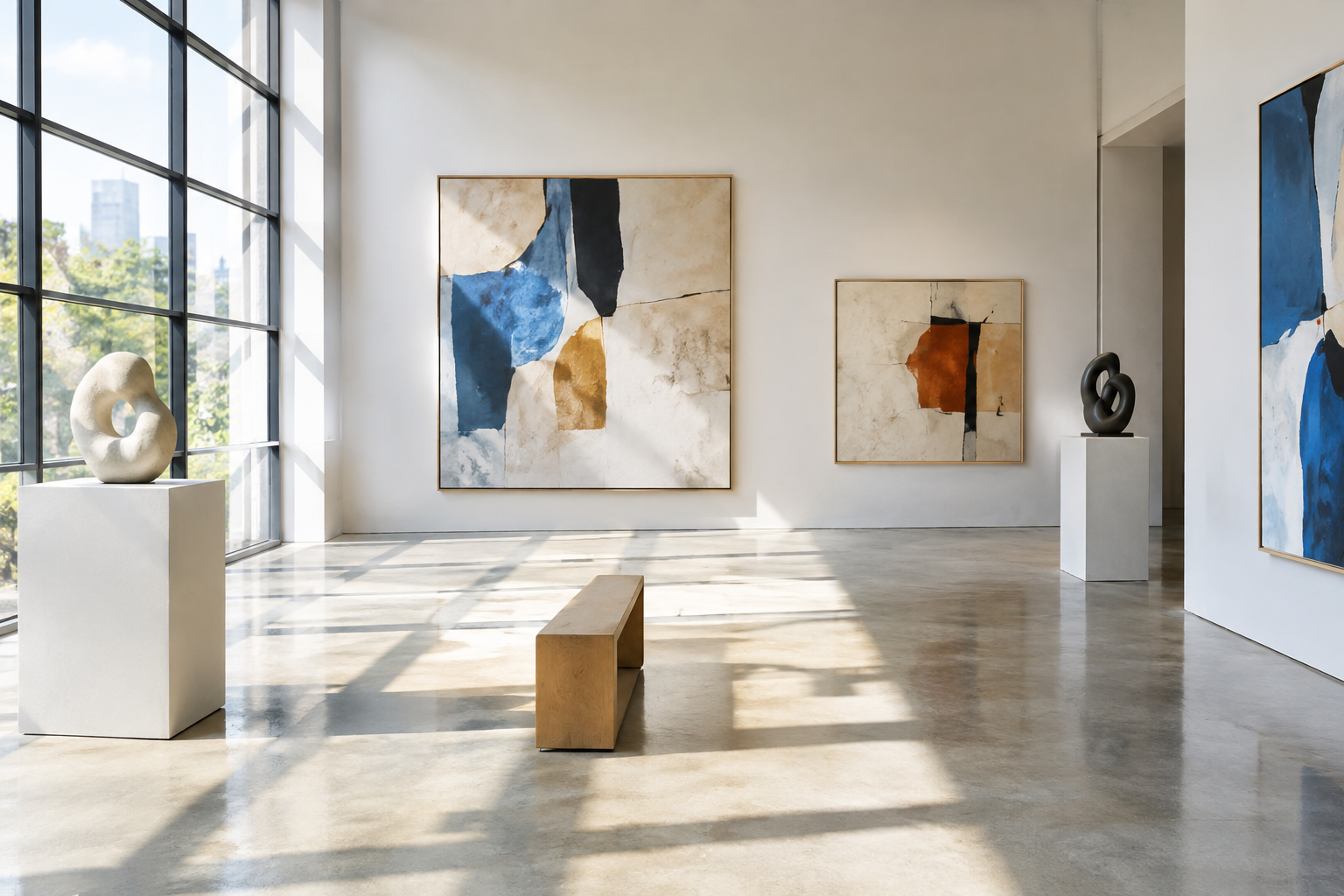
To explore contemporary art in Belleville, consider building your visit around exhibitions whose dates and access arrangements you can confirm, rather than a long list of gallery names. Choose a small number of spaces, check visitor information directly, then connect them with a walking route that leaves room for looking, conversation and changes of plan.
Use this guide as a planning method, not a live directory. Before setting out, verify current exhibition listings, opening hours and admission conditions with each organiser. When researching Belleville contemporary art galleries and artist-led venues, treat an old announcement, an opening invitation or a map listing as a lead to investigate—not confirmation that you can visit.
Start with the exhibition, not the address
Begin with what you want to see. You might be interested in painting, moving image, photography, installation, or the working processes behind an exhibition. Let that preference shape your shortlist before you start joining addresses on a map.
For each possible stop, look for an identifiable exhibition title, participating artists, a date range and a visitor information page. Treat a striking installation photograph as a reason to investigate, rather than sufficient information to plan a visit.
Separate two questions:
- Does this programme interest me?
- Can I actually visit it on my chosen day?
Keep both answers in your notes. Consider placing an exhibition with unclear access on a provisional list, rather than at the centre of your afternoon.
You can also choose a question to carry between spaces: how do artists use domestic objects, for example, or how does a display change your reading of a photograph? Try a modest theme without requiring every exhibition to fit it.
For optional reading before narrowing your research, browse the Magazine page. Check practical arrangements separately from any editorial reading.
Compare spaces by the visit they offer
When researching, distinguish between the format of a space and the experience you hope to have there. Do not assume that a venue’s name tells you its access policy, programme structure or relationship with artists. Read its own description and the information for the specific event.
A gallery exhibition, an artist-organised project, a studio visit and a temporary presentation deserve different planning questions. The following table is a working checklist, not a statement about the facilities or policies of any particular Belleville venue.
| Format to investigate | What to look for | Questions to resolve before visiting | Planning approach to consider |
|---|---|---|---|
| Gallery exhibition | Exhibition page and visitor details | Is the exhibition still on? Are normal visiting arrangements published? | Use as an anchor only after confirming access |
| Artist-led venue | Programme description and event-specific notice | Who organises the presentation? Does it have a limited schedule? | Read the individual announcement closely |
| Studio visit | Explicit invitation or booking information | Is public access offered? Is an appointment required? | Request permission rather than assuming entry |
| Temporary project | Host address and precise dates | Is this the current location? Is access tied to an event? | Keep a nearby alternative |
| Talk or performance | Event listing and attendance conditions | Is booking needed? What language and duration are stated? | Build the rest of the route around its timing |
Use these distinctions to balance your afternoon. You might choose one exhibition for sustained looking and another for a contrasting curatorial approach. Avoid treating an artist-led setting as automatically informal, or a gallery as automatically accessible without checking.
Research current information step by step
1. Build a provisional shortlist
Search for Belleville contemporary art galleries, then refine with your interests: sculpture, experimental film, group exhibition or artist-run programme.
At this stage, save possibilities rather than making commitments. Record where you found each lead, especially if it came from an undated image, an editorial feature or a reposted announcement.
2. Find the original announcement
Use discovery pages to locate the venue’s own exhibition notice or the organiser’s original information. Check whether the page describes a present exhibition, a forthcoming project or an archive entry.
Look at the full date range, including the year. If a search result displays a date, open the page and establish what that date refers to. Check whether it identifies the publication of an announcement or the exhibition itself.
3. Separate preview events from regular visiting
Do not use a reception, opening night or performance invitation as confirmation of arrangements for another day. Look for a separate visiting schedule and note any exceptions.
If you want to attend an opening, verify that the invitation is public and check whether registration is requested. Do not assume that a social post is an unrestricted invitation simply because it is visible.
4. Resolve conflicting details
When two pages disagree, mark the information as unresolved. Compare the date and specificity of each notice, then contact the organiser if the discrepancy affects your visit.
Consider sending a brief message explaining your intended visiting day and asking whether the exhibition will be open to the public and whether an appointment is necessary. Add an access question if relevant.
5. Save a compact visit record
For each confirmed stop, keep the exhibition title, address, date range, visiting arrangements, contact details and the original information page. Add the date on which you checked it.
Keep unanswered questions visible. For example, label an unresolved entrance question as “step-free entrance not confirmed”, rather than leaving the accessibility field blank. Revisit that question before deciding whether to include the stop.
Turn your shortlist into a manageable route
Choose your anchor stop first: the exhibition you most want to see, with access that you have confirmed. Add another stop only after checking how its visiting window fits around the first.
Use a map to inspect the actual walking route rather than judging distance from a neighbourhood label. Check the entrance location where possible, and examine any route details that matter to you, such as steps, gradients or complicated crossings. If those details remain uncertain, ask the venue or consider another route.
Think in terms of three kinds of time:
- Travel time between stops.
- Looking time inside each exhibition.
- Unallocated time for finding entrances, resting or changing plans.
Do not fill every available minute. Decide which stop you would drop if your first exhibition holds your attention longer than expected. Treat the route as a set of priorities rather than a race.
Keep any wider Paris plans separate until the art route works on its own. For optional reading, visit the Lifestyle page; verify the location and practical details of any additional stop before including it in your day.
Plan for the kind of visit you want
If you prefer a quiet, independent afternoon
Choose exhibitions with clearly stated public visiting arrangements. Consider asking whether any scheduled event will overlap with your intended visit. Bring a notebook if you like, but avoid setting yourself a compulsory response to every work.
Try giving one piece sustained attention before reading its interpretation. Then compare your first impressions with the available exhibition text. Treat this as an experiment in looking, not a test of artistic knowledge.
If conversation is your priority
Look for explicitly announced talks, walkthroughs or opportunities to meet artists. Confirm the format, language and attendance conditions before shaping your day around them.
Prepare one or two questions grounded in what you have seen. You might ask how a material was chosen or how the installation relates to the exhibition’s central idea. Avoid expecting an artist or member of staff to provide an unscheduled private tour.
If accessibility determines the route
Ask specific questions rather than relying on a general description of a space. Depending on your needs, these might concern entrance steps, lift access, seating, toilets, lighting or sound.
For audiovisual work, ask whether captions, transcripts or other relevant provisions are available. If the answer is incomplete, keep that uncertainty in your plan and decide whether a different stop would be preferable.
Use a simple method once you arrive
Before entering, check the door notice against your saved information. If the exhibition or access conditions differ, ask before proceeding. Do not treat a studio address or shared building as permission to explore beyond the public area.
Inside, consider a three-part approach:
- First, take in the arrangement of the room and choose where to begin.
- Next, spend time with a small number of works rather than trying to document everything.
- Finally, read the available context and revisit anything it makes you reconsider.
Ask before photographing if the rules are unclear. If permission is given, remain attentive to other visitors and any restrictions affecting particular works. Apply the same care to recording conversations or posting identifiable images of people.
Keep enquiries appropriate to your intentions. If you are considering a purchase, request the relevant details directly and take time to review them. Do not infer availability or terms from a work’s presence in an exhibition.
Before leaving, write down one observation and one question. Use these as points of comparison at the next stop, without turning the afternoon into an exercise in collecting names.
Two fictional ways to structure the afternoon
The following examples are entirely fictional planning scenarios. They do not describe named venues, real exhibitions or confirmed visiting conditions.
Scenario A: A first visit with limited time
Maya has one free afternoon and is interested in photography. Her initial search produces several possibilities, but only two have clear exhibition information for her chosen day. A third appears only in an old editorial mention, so she leaves it off the route.
She chooses the photography exhibition as her anchor and a mixed-media presentation as an optional second stop. Before travelling, she saves both addresses and checks the walking connection. She also decides that staying longer at the first exhibition would be a perfectly acceptable outcome.
At the anchor stop, she concentrates on how the images are sequenced. Her question for the second exhibition becomes whether objects can create a similar rhythm. The connection comes from her looking, not from a claim that the two programmes are related.
Scenario B: A visit centred on an artist-led event
Daniel finds an announcement for a discussion attached to an artist-organised presentation. The post gives an event time but leaves attendance conditions unclear. He contacts the organiser and waits for confirmation before making it his anchor.
For the rest of the afternoon, he considers one nearby exhibition with independently confirmed access. He does not add a studio address found in an unrelated post because there is no explicit invitation to visit.
His plan includes a fallback: if the discussion cannot be confirmed, he will visit the exhibition alone and postpone the event-led route. The unresolved information changes the plan rather than being explained away.
Errors to examine before you leave
Review your route for assumptions, especially if it began with an appealing list of names.
- An archived exhibition mistaken for a current one: check the year and complete date range.
- An opening invitation used as a weekly schedule: locate regular visitor information separately.
- A studio treated as a public venue: seek an explicit invitation or appointment.
- An old address copied into your notes: compare it with the current exhibition announcement.
- An unanswered access question treated as settled: retain a clear uncertainty marker.
- Too many essential stops: decide which exhibition matters most and which can be dropped.
- A closed door treated as permission to improvise: contact the organiser or move to your alternative rather than entering private areas.
After the visit, distinguish what you observed from what you were told or read. If you share recommendations with friends, include when you visited and encourage them to recheck arrangements. Avoid presenting the conditions of your afternoon as a promise about a future visit.
For further browsing after your walk, return to the Lookbook homepage. Keep your own exhibition notes separate from anything you decide to investigate next.
FAQ
How many exhibitions should I plan to visit?
Choose a small number that fits your available time and interests. Start with one priority and add optional stops only when their access and route make sense. Leave yourself permission to spend the afternoon at a single exhibition.
Can I visit an artist’s studio without an appointment?
Do not assume so. Look for an explicit public invitation or contact the organiser. If you cannot establish that visitors are welcome at your intended time, leave it off the confirmed route.
What should I do if the website and a social post disagree?
Check what each notice refers to and when it was published. If the conflict concerns your visit, ask for clarification. Until then, keep the stop provisional and avoid making the whole afternoon depend on it.
Do I need specialist knowledge to enjoy the exhibitions?
Try beginning with direct observation and questions. Choose a work, describe what holds your attention, then consult the available text. Aim for a considered encounter rather than a correct interpretation or a completed checklist.