

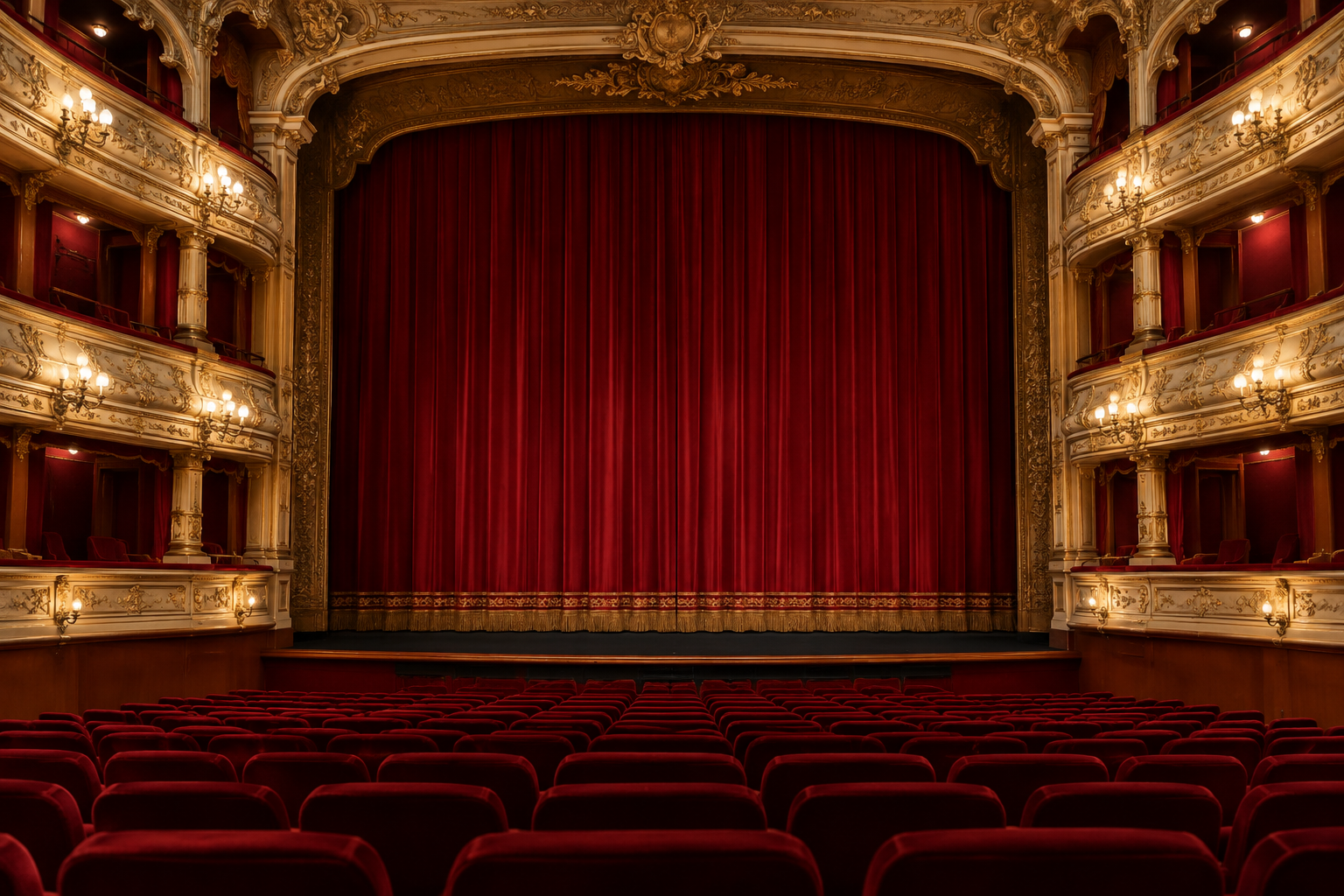
For a first visit to the Monte-Carlo Opera, start with the performance rather than the photograph: choose a programme that interests you, check the seating information for that specific event, and read the published visitor guidance before booking. Treat architecture, atmosphere and the evening’s wider itinerary as part of the experience, but not as substitutes for those practical checks.
This Monte Carlo Opera visitor guide offers a method for making those decisions without assuming that today’s arrangements will apply to your date. It does not establish current programmes, ticket availability, access arrangements or house rules. Instead, it explains what to look for, which questions to ask and how to approach the building and performance with an attentive eye.
Begin with two experiences: the room and the performance
An opera visit can be approached in two complementary ways: as an encounter with a designed interior and as an evening shaped by a live performance. Give both some attention, while keeping their requirements separate.
If architecture is your principal interest, investigate whether a published visiting arrangement exists for your intended date. Do not assume that a performance ticket includes unrestricted access to interiors, or that a non-performance visit is available. If the music comes first, assess the programme before deciding how to fit the evening into your travel plans.
For your architectural preparation, consider three questions:
- What would you like to observe: the overall room, decorative details, the relationship between stage and audience, or the sequence of public spaces?
- Which of those areas does the published information actually say you may enter?
- Would a performance allow the kind of looking you have in mind, within the venue’s rules?
This distinction is useful when planning photography, too. Wanting to remember a room is not the same as having permission to photograph it. Leave that question open until you have checked the relevant guidance.
Look at the architecture without relying on borrowed superlatives
You do not need a list of architectural adjectives to appreciate a theatre. A more rewarding exercise is to look closely and describe what you can actually see from the spaces you are permitted to use.
Read the room at different scales
Begin with the overall composition. Notice how your eye moves between the stage, seating areas and ceiling. Then narrow your attention to materials, patterns, lighting and the treatment of doorways or thresholds. Where details are visible, ask how they relate to the larger arrangement rather than treating each ornament as an isolated attraction.
Keep observation separate from historical attribution. You can note a repeated motif without assigning it to an artistic movement, and describe a surface without guessing its material. For names, dates, restoration histories or design authorship, consult documentary material before making a confident claim.
Consider your seat as a viewpoint
The seat you choose is also the position from which you will encounter the room. Before booking, decide whether your priority is watching the stage, following text displays if provided, or taking in the interior during permitted moments.
Those priorities may point towards different questions. A photograph of an empty auditorium cannot establish what you will see from a particular seat. Use the published seating information, and ask about anything that remains unclear.
For a separate reading break while planning, consider browsing the Magazine section. Keep any additional activity separate from the opera booking until its timing is confirmed.
Approach performance traditions through the actual programme
For a newcomer, “opera” can sound like a single kind of evening. Your better starting point is the individual event listing: what is being performed, how it is presented, who is listed and what supporting information is published.
Read the work’s title alongside the event description. Look for whether the presentation is identified as staged, concert-based or another format. Do not infer the format from a promotional image alone. If you are unfamiliar with a term, resolve it before deciding that the event matches your expectations.
Prepare for the work, not an imagined ritual
Consider reading a short synopsis and sampling the music before you go. If discovering the story in the theatre matters to you, choose an introduction that avoids revealing the ending. If following the drama is your main concern, examine any published language and text-display information.
Treat performance traditions as something to learn about rather than a test you must pass. Questions about applause, intervals or the structure of the evening are reasonable. Consult introductory material where available, and avoid assuming that an anecdote about another theatre describes the practice here.
During the performance, aim for attentive participation rather than perfect insider knowledge. If you are unsure about a practical matter, ask staff at an appropriate moment instead of relying on an online account of a previous visitor’s experience.
Check the programme in a deliberate order
A beautiful event image is an invitation to investigate, not a complete booking brief. Work through the listing in an order that connects the artistic choice to your practical needs.
Step 1: Confirm the exact event
Match the title, date and stated start time across the event page and booking selection. If several dates appear, make sure you are not carrying details from one performance into another. Save the confirmation for the date you actually purchase.
Step 2: Read the presentation details
Look for the format, listed performers, language information and any explanatory notes. Treat missing information as a question, not as permission to fill the gap from memory. If a particular artist or feature determines your decision, read any published conditions relevant to changes before committing.
Step 3: Establish the evening’s likely shape
Check whether a running time and interval information are published. Distinguish an estimated duration from an exact finishing time. If no useful timing is available, ask before arranging a tightly timed connection or reservation afterwards.
Step 4: Examine booking conditions
Read the terms attached to the ticket you are considering, including any stated restrictions or procedures for changes. Do not import expectations from a different seller, venue or previous trip.
Step 5: Record what remains unresolved
Keep a short list of unanswered questions. A focused enquiry about a seat, an entrance or a timing issue is more useful than asking for every detail of the evening at once.
Choose seating by your priorities
Start with what you need to follow comfortably, then compare the available information. A category name or price alone does not answer every question about a seat.
Use this table as a working checklist, not as a description of any particular seating category.
| Your priority | Information to examine | Question to resolve before purchase |
|---|---|---|
| Following stage action | Seating plan and any restriction notes | Is any part of the stage view restricted from this seat? |
| Reading displayed text | Published language and display information | If text is provided, can it be read from this position? |
| Step-free access | Access guidance and route details | Does the route to the exact seat meet your requirements? |
| Physical comfort | Any published seat or space information | Are there dimensions or other details relevant to your needs? |
| Sitting together | Exact seat identifiers | Are the selected places adjacent in the intended arrangement? |
| Experiencing the room | Plan, orientation and permitted access | Does this position suit the way you want to observe the interior? |
| Managing the total cost | Checkout summary and ticket conditions | What is the complete payable amount, and what conditions apply? |
If the plan is difficult to interpret, ask about the exact seat rather than requesting a general recommendation. State your priority plainly: an unobstructed stage view, a suitable access route or another specific requirement.
Where your requirements are essential rather than preferences, resolve them before paying. Do not treat an attractive seat photograph or a broad category description as an answer to a precise access question.
Read visitor guidance as a separate planning task
Once you have identified a suitable performance and seat, turn to the practical guidance. Read it for your event and revisit it before departure, rather than relying on a remembered summary.
Arrival and entry
Check the published entry location, any requested arrival guidance and ticket presentation instructions. Plan the journey to the stated entrance, not simply to a map label for the destination. If you expect difficulty finding the entrance or following the route, seek clarification in advance.
Clothing and belongings
Look for an explicit dress policy before choosing an outfit around assumptions. If the guidance leaves room for interpretation, consider clothing that feels appropriate to the occasion and comfortable for your journey and time seated.
Check any published information about bags, storage and prohibited items. Do not assume that somewhere to leave luggage will be available. Make a separate plan for belongings that you do not need during the performance.
Photography, phones and late arrival
Read the photography and recording rules rather than inferring permission from other visitors’ behaviour. Check device guidance as well, and prepare your ticket for presentation in the format specified.
Look for late-arrival instructions, but do not build your itinerary around being admitted after the start. If a transport delay becomes likely, consult the published contact or guidance rather than guessing what will happen.
Access requirements
Describe your requirements concretely when making an enquiry. Ask about the complete route, relevant facilities and any arrangements needed for your chosen performance. A general accessibility statement may leave individual questions unresolved; seek the detail you need to make your decision.
Build the rest of the evening around confirmed information
Once the booking is settled, add the surrounding plans. Avoid making dinner, transport and sightseeing depend on an unverified finishing time or an assumed entry arrangement.
Consider leaving flexibility before the performance for finding the entrance and dealing with an unexpected delay. Afterwards, choose arrangements that fit the timing information you have actually established. If timing remains uncertain, prefer a flexible plan over a sequence of fixed reservations.
Consider browsing the Lifestyle section separately while shaping the wider occasion. Assess each additional idea on its own practical terms rather than assuming it will fit around the performance.
A simple planning note can hold the essentials: event title, date, seat, booking confirmation, entry instructions, unresolved questions and onward arrangements. Keep it concise enough to consult easily while travelling.
Two fictional first visits: different priorities, different decisions
The following scenarios are fictional planning examples, not reports of actual performances or venue arrangements.
The architecture-led visitor
Maya is spending part of her trip looking at interiors. She is tempted to buy whichever ticket fits her itinerary, mainly to see the room.
Before purchasing, she separates her aims. She checks whether any visiting arrangement is published, then examines the performance itself. If she chooses to attend, she accepts that her movement and photography must follow the relevant rules. She asks about the viewpoint from a specific available seat rather than assuming every position will suit her architectural interest.
Her decision turns on whether she wants that performance as well as access to its setting. If the answer is no, she continues researching instead of treating a ticket as a general sightseeing pass.
The music-led newcomer
Daniel wants his first opera experience to centre on the drama. He begins with the work, reads an introduction and checks the published presentation and language details.
His seating questions concern the stage view and any text display. He also needs to know whether the evening fits his return journey. Where timing information is incomplete, he asks before booking transport.
His preparation list is different from Maya’s, but neither approach is inherently better. Each visitor turns a broad wish into questions that can be answered before purchase.
Common mistakes worth examining
The most useful final check is to look for assumptions disguised as settled plans.
- Booking for the building alone. Ask whether you also want the performance and understand what the ticket permits.
- Treating an old visitor account as current guidance. Return to the published information relevant to your date.
- Choosing by category label alone. Examine the exact seat and resolve any restriction or access question.
- Assuming language support. Check what is stated for the individual event.
- Planning a precise finish without evidence. Keep onward arrangements flexible when duration is unresolved.
- Guessing rules from photographs. Check photography, clothing and belongings guidance directly.
- Leaving essential enquiries until arrival. Raise requirements early enough to inform your booking decision.
For further browsing before or after the visit, return to Lookbook. Keep your opera notes focused on the event you have selected, so inspiration and confirmed arrangements remain distinct.
Frequently asked questions
Can I visit without attending a performance?
Check whether a current visiting arrangement is explicitly published for your intended date. Do not infer public access from exterior photographs, travel descriptions or the existence of performances. If you cannot establish an arrangement, leave access unconfirmed.
What should I wear?
Read the published dress guidance first. Where it does not specify an answer to your question, consider a comfortable outfit suited to your own sense of the occasion. Avoid treating social media photographs as proof of an admission requirement.
Which seat is best for a first visit?
There is no useful universal answer without your priorities and the relevant seating information. Decide what matters most, inspect the exact available positions and ask about unresolved details. Give essential access requirements priority over aesthetic preferences.
What should I check again shortly before going?
Revisit the event details, ticket instructions, entry location, visitor guidance and travel plan. Keep your confirmation accessible and review any communication relating to the booking. The aim is not to anticipate every possibility, but to arrive with the important questions already answered.