
The Art of the Palace the Promise of Calm
At the gates of the Red City, where Marrakech stretches toward the foothills of the Atlas Mountains, The Oberoi Marrakech feels like a rare interlude an exceptional retreat away from the bustle, yet only twenty-five minutes from the international airport, Jemâa el-Fna Square, and the medina.
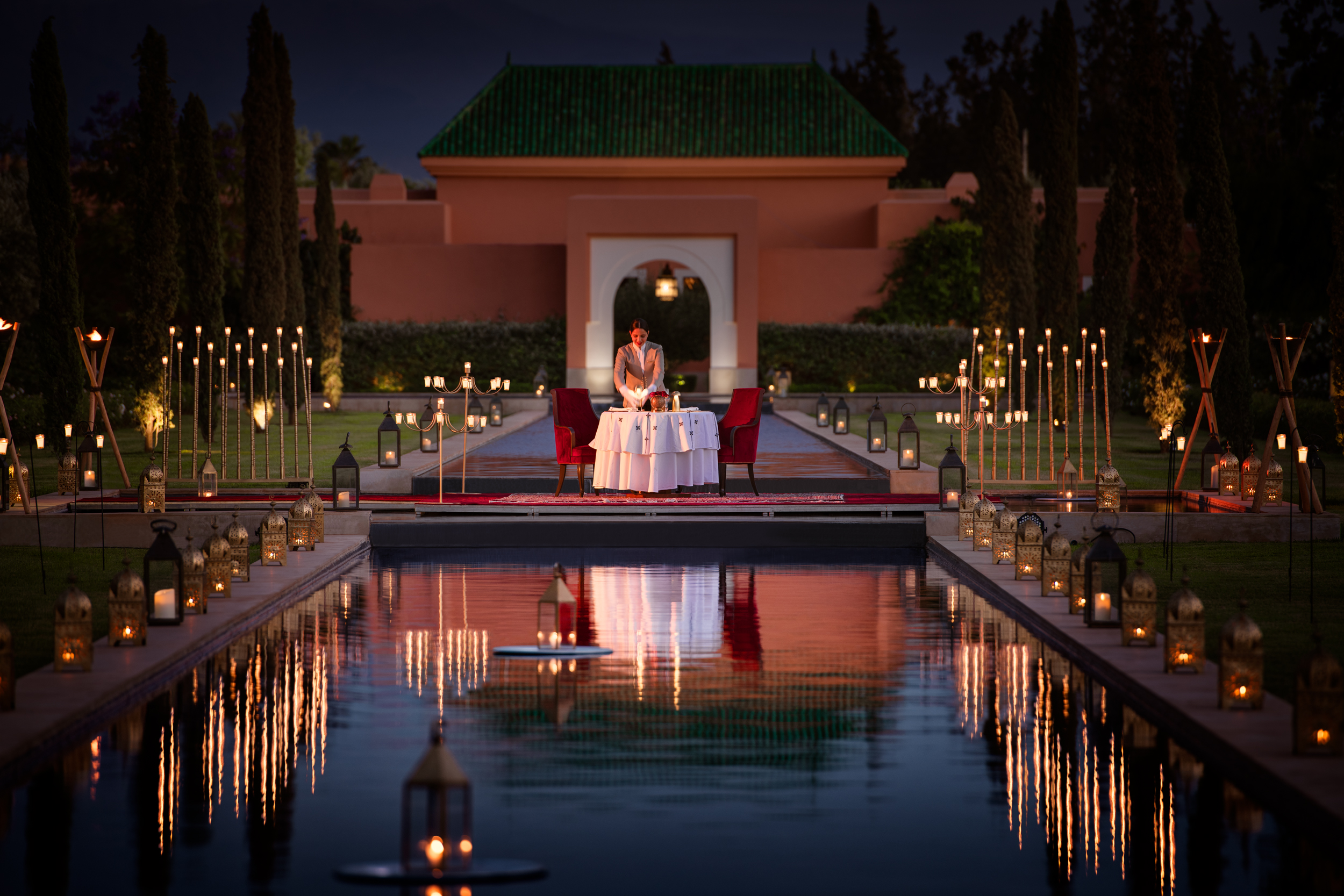
From the moment you arrive, the sensation is immediate: time slows down here. The vista opens onto an 11-hectare estate of olive groves and orchards, where water weaves a soothing thread between gardens, patios, and pools.
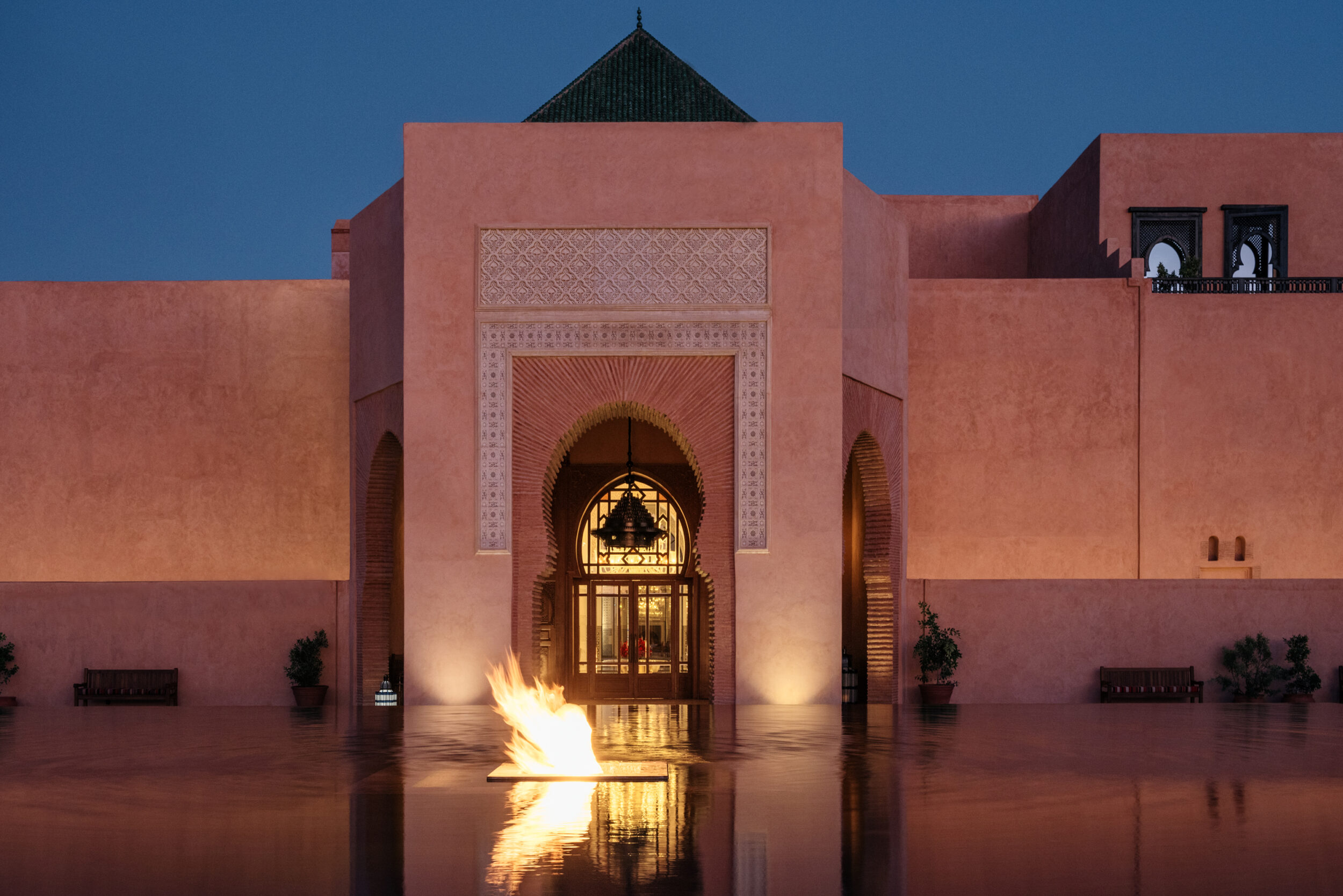
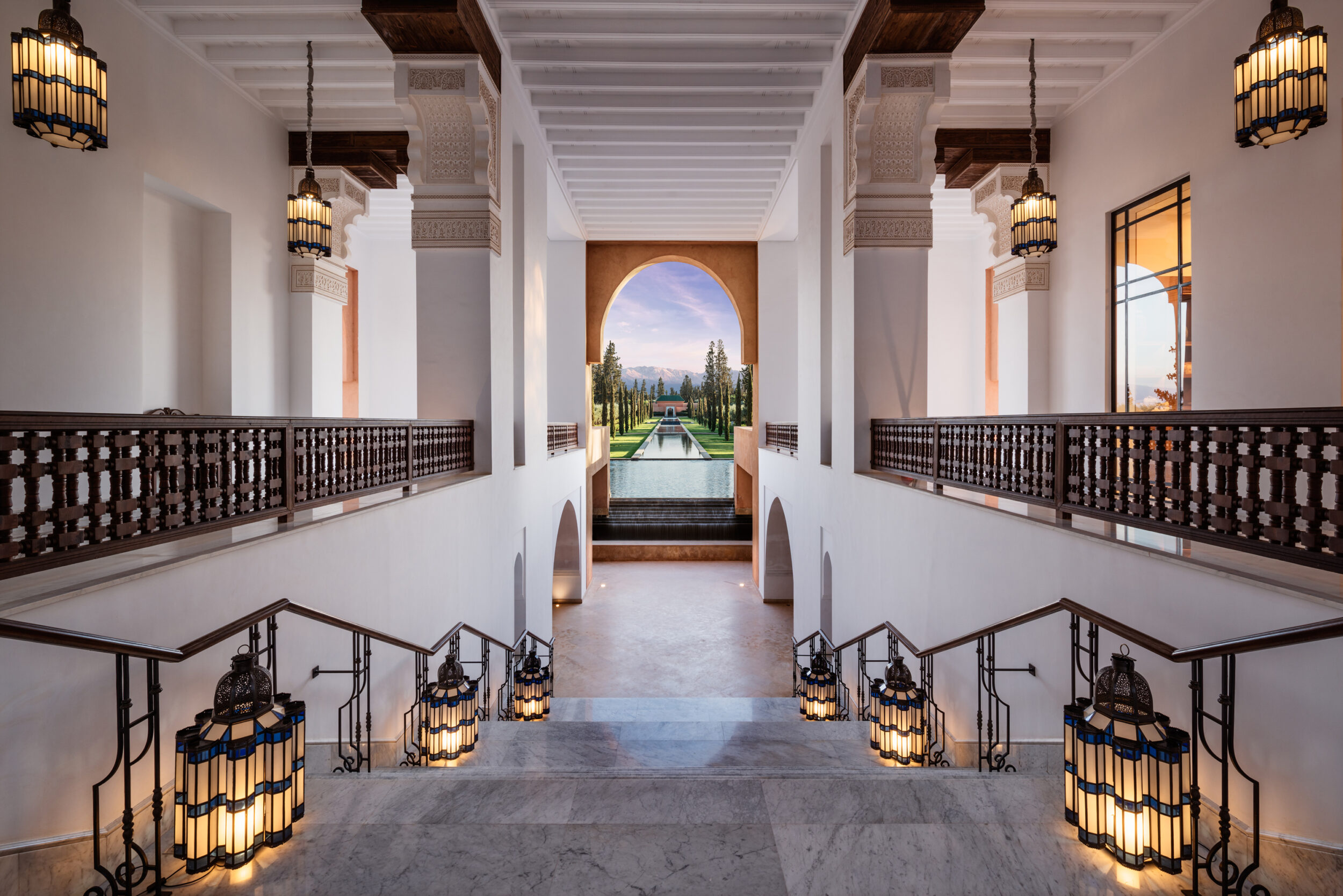
A deliberate tribute to Moroccan and Andalusian styles, The Oberoi Marrakech draws inspiration from the great 14th-century Merinid palaces, while also evoking the spirit of the iconic Ben Youssef Madrasa.
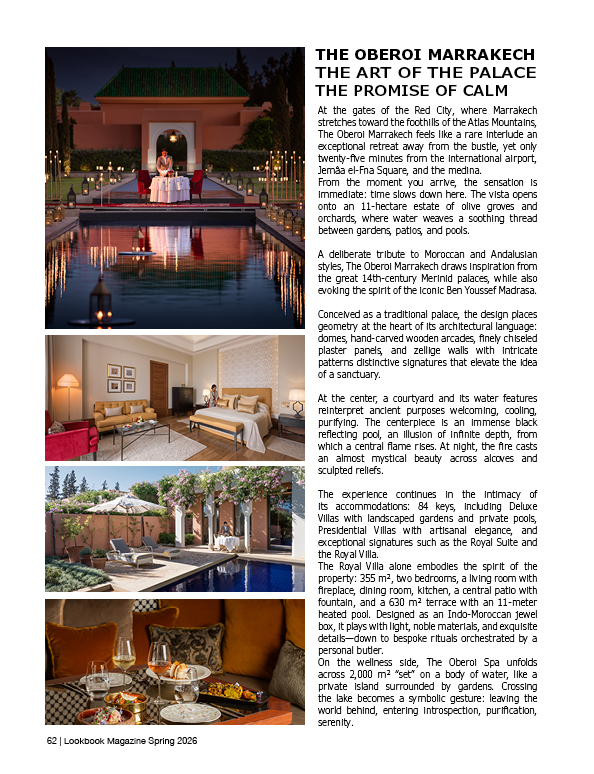
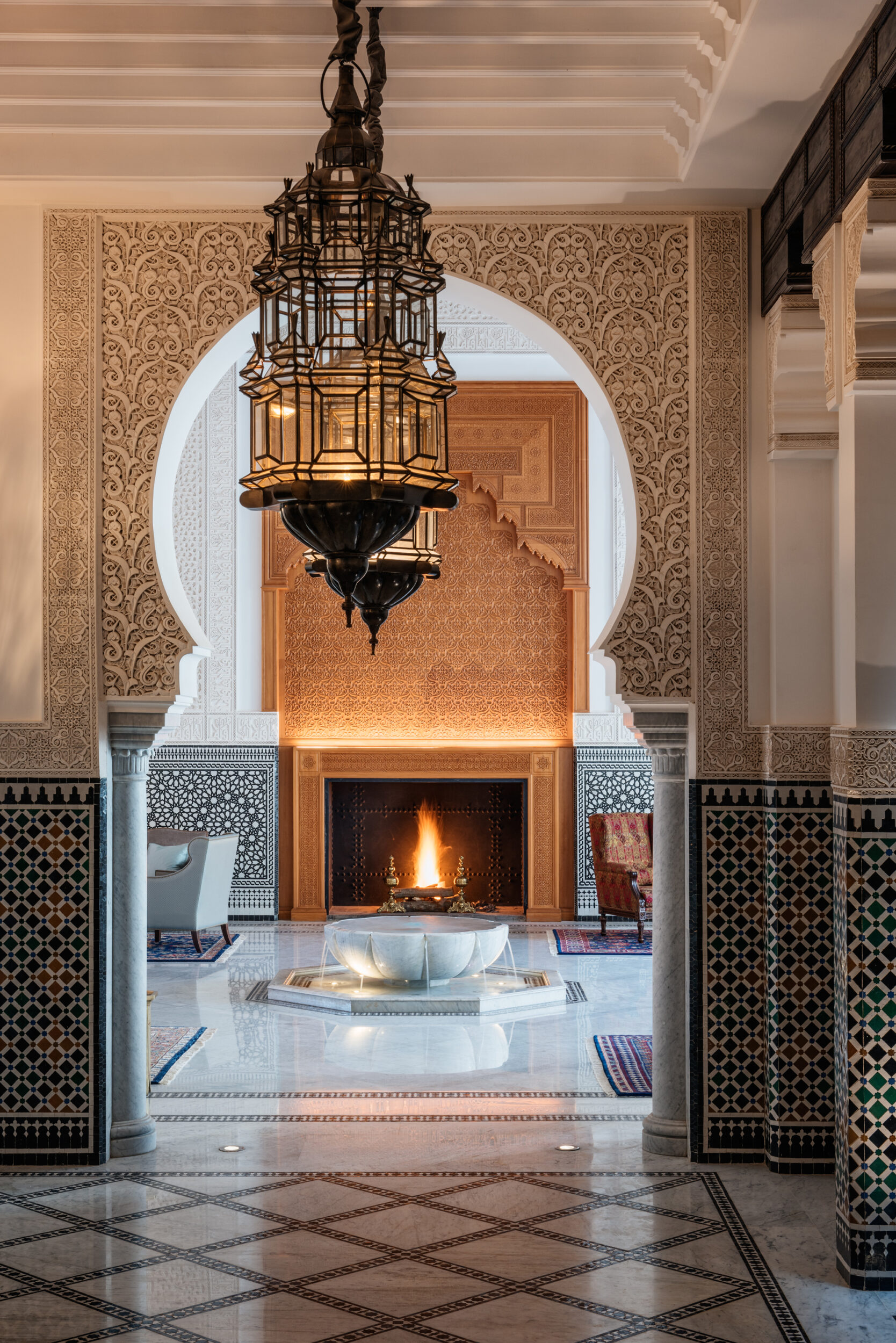
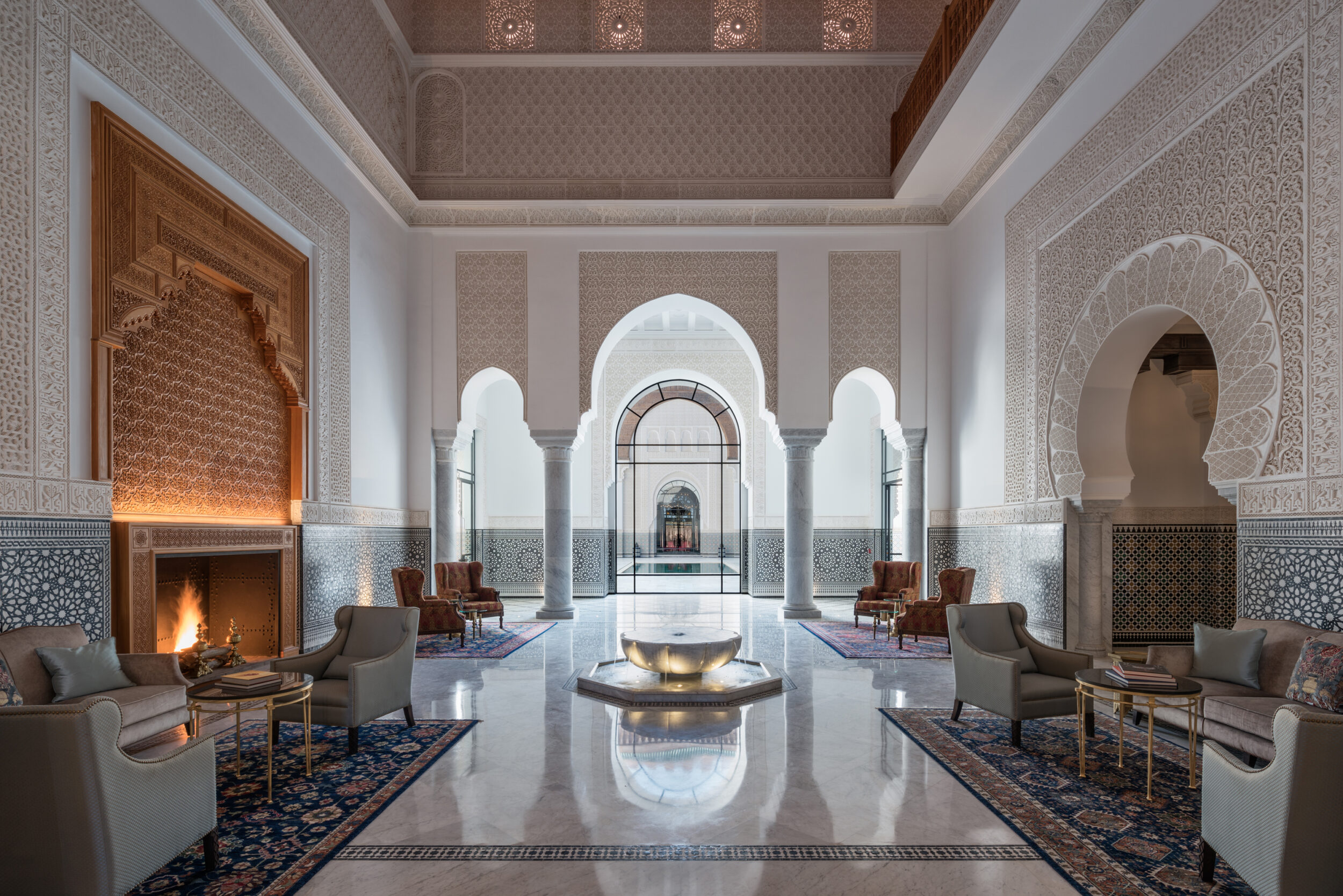
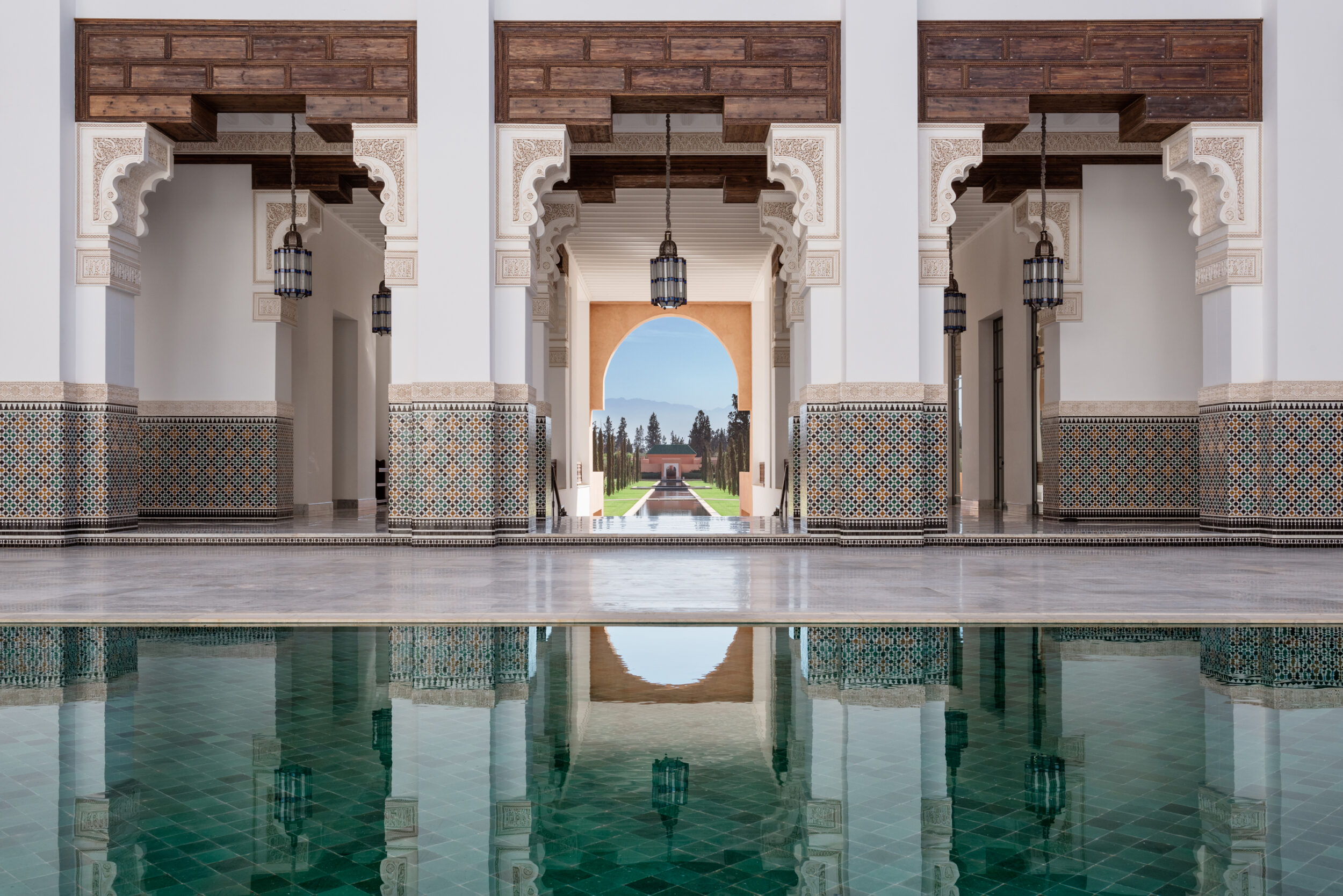
Conceived as a traditional palace, the design places geometry at the heart of its architectural language: domes, hand-carved wooden arcades, finely chiseled plaster panels, and zellige walls with intricate patterns distinctive signatures that elevate the idea of a sanctuary.
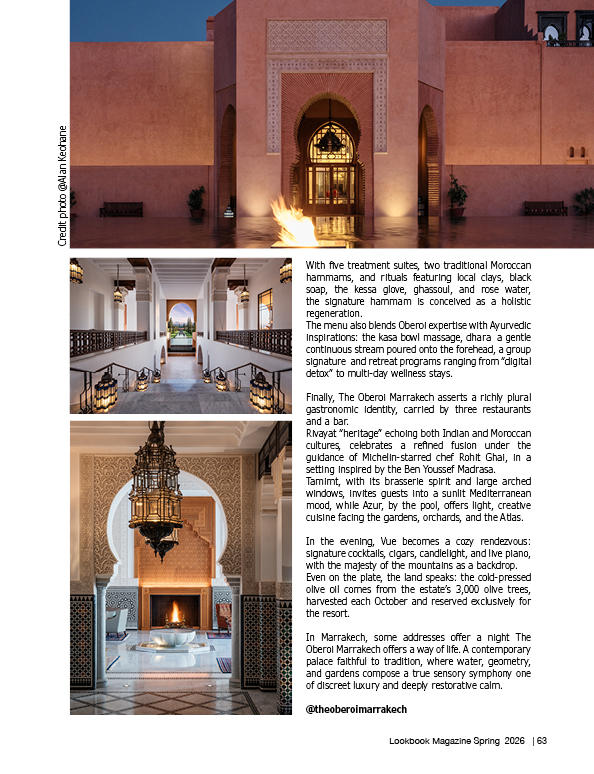
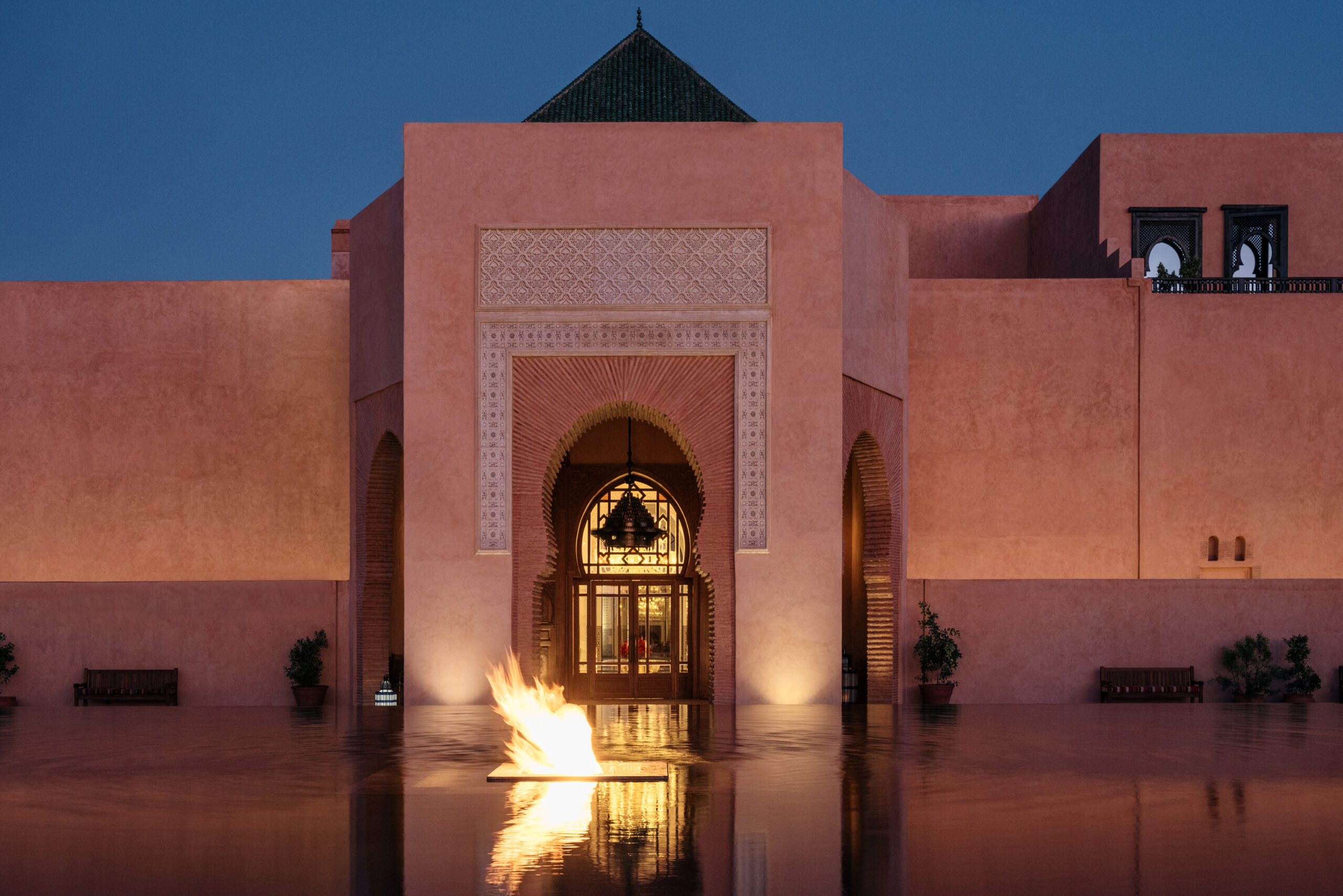
At the center, a courtyard and its water features reinterpret ancient purposes welcoming, cooling, purifying. The centerpiece is an immense black reflecting pool, an illusion of infinite depth, from which a central flame rises. At night, the fire casts an almost mystical beauty across alcoves and sculpted reliefs.
The experience continues in the intimacy of its accommodations: 84 keys, including Deluxe Villas with landscaped gardens and private pools, Presidential Villas with artisanal elegance, and exceptional signatures such as the Royal Suite and the Royal Villa.
The Royal Villa alone embodies the spirit of the property: 355 m², two bedrooms, a living room with fireplace, dining room, kitchen, a central patio with fountain, and a 630 m² terrace with an 11-meter heated pool. Designed as an Indo-Moroccan jewel box, it plays with light, noble materials, and exquisite details—down to bespoke rituals orchestrated by a personal butler.
On the wellness side, The Oberoi Spa unfolds across 2,000 m² “set” on a body of water, like a private island surrounded by gardens. Crossing the lake becomes a symbolic gesture: leaving the world behind, entering introspection, purification, serenity.
With five treatment suites, two traditional Moroccan hammams, and rituals featuring local clays, black soap, the kessa glove, ghassoul, and rose water, the signature hammam is conceived as a holistic regeneration.
The menu also blends Oberoi expertise with Ayurvedic inspirations: the kasa bowl massage, dhara a gentle continuous stream poured onto the forehead, a group signature and retreat programs ranging from “digital detox” to multi-day wellness stays.
Finally, The Oberoi Marrakech asserts a richly plural gastronomic identity, carried by three restaurants and a bar.
Rivayat “heritage” echoing both Indian and Moroccan cultures, celebrates a refined fusion under the guidance of Michelin-starred chef Rohit Ghai, in a setting inspired by the Ben Youssef Madrasa.
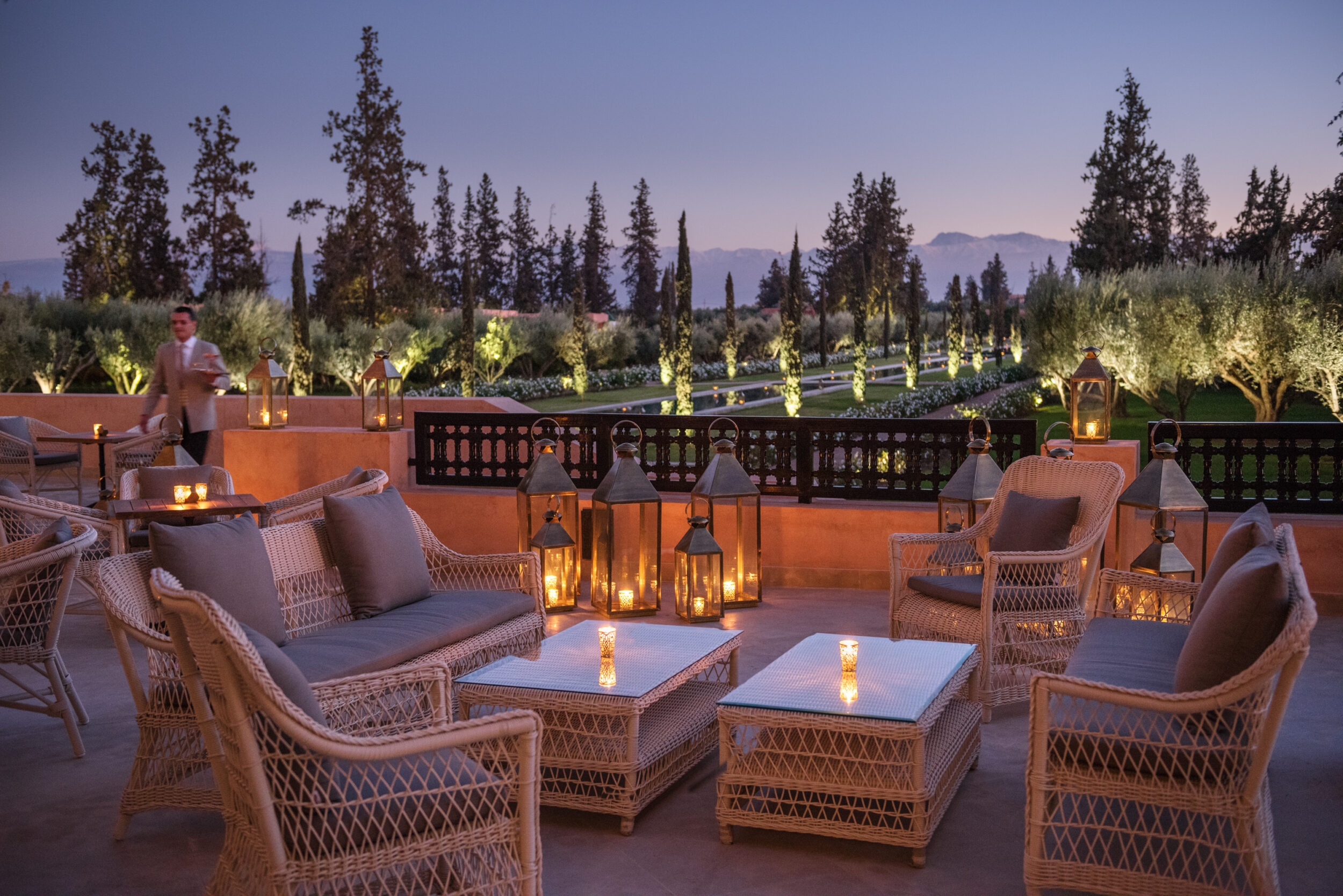
Tamimt, with its brasserie spirit and large arched windows, invites guests into a sunlit Mediterranean mood, while Azur, by the pool, offers light, creative cuisine facing the gardens, orchards, and the Atlas.
In the evening, Vue becomes a cozy rendezvous: signature cocktails, cigars, candlelight, and live piano, with the majesty of the mountains as a backdrop.
Even on the plate, the land speaks: the cold-pressed olive oil comes from the estate’s 3,000 olive trees, harvested each October and reserved exclusively for the resort.
In Marrakech, some addresses offer a night The Oberoi Marrakech offers a way of life. A contemporary palace faithful to tradition, where water, geometry, and gardens compose a true sensory symphony one of discreet luxury and deeply restorative calm.
@theoberoimarrakech